
Fire Systems
& Alarms
Alarm System Services
Fire Alarms
Protecting people, property, and business operations starts with a reliable fire alarm system. At HC Networks, we design, install, inspect, and service commercial fire alarm systems that provide early detection, fast notification, and dependable performance when it matters most. Our systems are engineered to meet local building codes, NFPA standards, and the unique safety requirements of your facility.
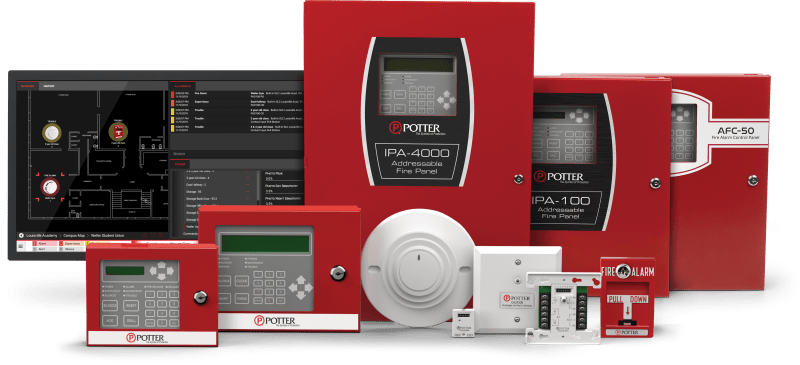
Modern fire alarm systems combine multiple detection technologies to provide comprehensive protection. Common detection devices include:
- Smoke Detectors – Available in both ionization and photoelectric technologies to detect a wide range of fire conditions, from fast-flaming fires to slow, smoldering fires.
- Heat Detectors – Designed for environments where smoke detectors may not be suitable, heat detectors activate when temperatures exceed a predetermined threshold or rise rapidly.
- Manual Pull Stations – Allow building occupants to quickly initiate the fire alarm system in the event of an emergency.
- Horn/Strobe Notification Devices – Audible and visual notification appliances alert occupants to evacuate safely while meeting ADA accessibility requirements.
- Integrated Monitoring – When connected to a 24/7 central monitoring station, alarm signals are immediately transmitted to emergency responders, reducing response times and helping minimize property damage.
Whether you need a new fire alarm system for a commercial facility, an upgrade to an existing installation, ongoing inspections, or around-the-clock monitoring, HC Networks delivers reliable, code-compliant fire protection solutions that help keep your people and your business safe.
Smoke Detectors/Alarms
The two most commonly used methods of smoke detection are ionization smoke detection and photoelectric smoke detection.
- Ionization smoke alarms: These alarms are generally considered to be more responsive to flaming fires. Ionization smoke alarms use a small amount of radioactive material between two electrically charged plates, giving the air an electric charge, creating a circuit. When smoke enters the chamber, this circuit is disrupted, causing the alarm to sound.
- Photoelectric smoke alarms: These alarms are more responsive to fires that begin with a long period of smoldering. Photoelectric alarms aim a light source into a sensing chamber at an angle away from the sensor. When smoke enters the device, it reflects light onto the light sensor which triggers the alarm.
Each type of smoke alarm provides an advantage over the other. For the best protection, it is recommended to use both ionization and photoelectric fire alarms.

Carbon Monoxide Alarms
Carbon monoxide (CO) is a colorless, odorless, toxic gas that kills more that 430 people every year. Even small doses of this gas can cause permanent damage or death. Carbon monoxide detectors are the easiest and fastest way to prevent carbon monoxide poisoning. They work very similar to your fire alarm at home, sounding a siren when they detect carbon monoxide. Different sensors set off different types of alerts:
- Biomimetic sensor: a gel changes color when it absorbs carbon monoxide. When the color is changed, it triggers the alarm.
- Electrochemical sensor: Electrodes suspended in a chemical solution detect changes in electrical current when they com into contact with carbon monoxide. When the change occurs, the device triggers the alarm.
- Metal oxide semiconductor: A silica chip’s circuitry detects carbon monoxide by picking up on changes in electrical current. If carbon monoxide is present, it lowers the electrical resistance of the device, triggering the alarm.
After a carbon monoxide alarm sounds, the detector must be taken to a carbon monoxide-free environment to stop the alarm. Most carbon monoxide alarms are designed to trigger before you start sensing symptoms.


